Showing posts with label Agriculture. Show all posts

Friday, 2 January 2015

Revival of Agriculture Sector


  • Asif Maqbool
  • Muhammad Rasheed


Agriculture today presents us with a problem that may soon appear in the non-agricultural sectors as well: a growing gap between productivity and demand. Demand for agricultural products is fairly stable, as there are limits to the number of uses to which agricultural products can be put. Competition between farmers to satisfy this demand leads to increased efficiency, productivity and hence, to higher production. Higher production and stagnating demand combine to depress product prices, forcing farmers to produce even more efficiently. As a result, there is more oversupply, and prices drop even further. The less efficient producers are forced out of business, those remaining keep running the competitive rat race until they fall out of the treadmill themselves.
The result of this process is that today, in developed countries, only a few percent of the work force is still employed in agriculture. In the U.S. and Northern Europe farmers make up only some 2% of the working population - compared to close to 50% a century or so ago. Even so, many economists consider the agricultural sector as inefficient. Especially in Europe and Japan there are still large numbers of relatively small farmers who, according to economic criteria, should have gone out of business long ago. Protection from imports, subsidies and artificially high prices help them survive. If market forces were given free reign, most of this group would be forced out of business in a matter of years. In modern agriculture, productivity has been raised to such levels that in principle, only 1% of the working population can satisfy all demand.
With efficiency and production, the costs of farm support measures have also increased. A significant part is subsequently dumped on world markets at prices at which no non-subsidised producer can compete. The result is economic disaster for producers from countries that do not protect their farmers. Particularly hard hit are small farmers in poor countries who do not have the high quality land nor the access to capital and technology to switch to more lucrative crops. Those who do manage to produce exportable crops face the protectionism of the same nations doing the dumping.
 Officially these costly and damaging support programs were created and maintained to raise the incomes of farmers whose earnings stay behind those of the rest of society. But do they really do what they are supposed to do? In the early 1990s, 80% of the European Community subsidies went to the wealthiest 20% of farmers. In the U.S., this figure was about 70% - with the richest 1% of farmers receiving close to 30%: about as much as the bottom 80%. This is less surprising than it may seem: after all, one does not have to be an economist to figure out that the biggest beneficiaries of price supports and programs to keep land out of production are those who produce the most and have the most land. Those are large farmers and in the US, where in some fields of agricultural production family farming has all but disappeared, agro-industrial corporations. Thus, the $75 billion the European Community and the US government dish out each year mostly benefit the rich. Considering this skewed distribution of benefits, it is hardly surprising that in spite of all the billions spent, the income situation of smaller farmers continues to deteriorate.
Issues
There are many differences between agriculture in rich and poor countries, but there is also a remarkable resemblance: subsidies go to those who need it the least. Moreover they are, directly or indirectly, paid for by those who can least afford it. As in the rich nations, governments of almost all developing countries have, since the sixties, heaped billions of dollars of subsidies on the agricultural sector. Most of those funds have gone to the commercial farming sector, meaning medium and especially large scale farmers. While the large majority of small farmers in developing countries have to live off small plots without recourse to credit, inputs, technical assistance or irrigation, commercial farmers have benefited from state financed-irrigation projects, infra-structural development and subsidies on credit and inputs. Irrigation water, generated through projects that have contributed significantly to getting the countries involved into debt, is provided to beneficiaries free of cost or for a symbolic fee. Subsidies on farm inputs and their consequent excessive use lead to more waste, costs to the public and damage to the environment.
 The drawback hampering the development of agriculture is the distortion of world market prices by the protectionism, subsidies and dumping practices of the rich countries. Many poor nations have large areas with climates and soils favourable for agricultural production. They could produce much more food than would be needed to feed their populations, at internationally competitive prices. But as we've already seen, export possibilities are severely limited because of the protection the rich countries provide for their own producers. Moreover, the rich countries’ practice to dump their surplus production on world markets depresses prices and thus, the possibilities for poor countries to earn much needed foreign exchange.
One important factor inhibiting poor countries from developing their agricultural potential is the skewed distribution of land. Although in some poor countries there is simply not enough arable land to go around, in most the problem is not so much the quantity and quality of land as its distribution. Small groups of large, often extremely wealthy land owners possess most or all of the high quality arable land. They usually live in the cities, where they have business interests in the industrial and service sectors as well, and occupy high positions in government. Often, agriculture is not even their main source of income. Much of their land is not or only very extensively used, and maintained simply as an investment.
In contrast, millions of small farmers have to make a living on small plots of marginal land, often on hill or mountain sides vulnerable to erosion. Without fertile land, capital, technical support and adequate marketing channels they are limited to growing their traditional food crops. Due to the competition from grains and other foodstuffs dumped by the rich countries, prices for their products are low. Production decreases as diminishing returns make it virtually impossible to invest in maintaining soil fertility. If the decrease in farm income is such that survival is impossible, these small farmers sell their land or simply abandon it, joining the constant stream of people flowing to the cities in search of better opportunities.
In developed countries the agriculture sector is overly productive, energy inefficient, and mostly, harmful to the environment. Under pressure from the farm lobby, dominated by rich farmers  and large corporations, governments maintain artificially high prices and protect their internal markets. Part of the resulting excess production is dumped on world markets, handicapping already disadvantaged producers elsewhere even further. In name, these enormously costly programs serve to keep farm incomes at acceptable levels. In practice, most of the benefits end up with already rich farmers and agri-business, whereas smaller farmers remain poor and continue to be pushed out of business.  In poor countries, small elites own the best agricultural land and command the bulk of other scarce resources, whereas a large proportion of small farm families have to make a living on marginal soils with minimal resources and little or no support. Prices for the foodstuffs they produce drop precipitously because of the dumping practices of rich countries, whereas export possibilities are limited by the import restrictions of same. With low prices, poor land and lack of access to such key facilities as inputs, credit, marketing, adequate technical assistance and transport, small farmers are hard put to remain on the land.
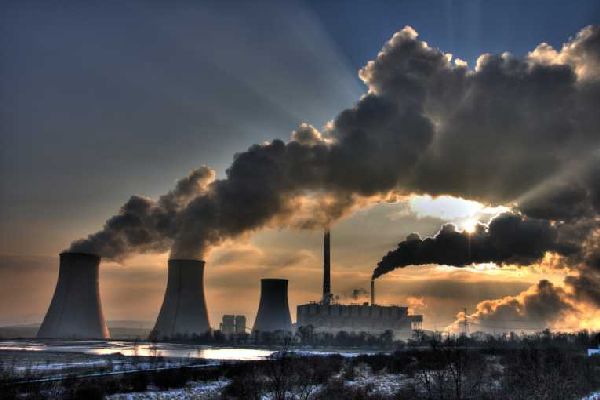
As for the environment, modern industrial agriculture causes large scale pollution, waste quantities of non-renewable energy and water, and destroys soils. Moreover, it becomes increasingly doubtful that the impressive gains in productivity that up till now were used to justify these drawbacks can be sustained. Because of the problems of pest resistance and the loss of genetic material, society's almost total dependence on industrial agriculture puts humanity at considerable risk. Simultaneously, small scale agriculture in marginal conditions, especially in mountainous areas, threatens the global resource base through huge losses of fertile top soil and the destruction of natural and man-made water management systems.
Policy Options
The above described problems make it obvious that, from a social, economic and ecological perspective, a new approach to agriculture is needed. From a social point of view, the main characteristic of this new approach should be to allow the large majority of today’s agricultural producers to (continue to) make a decent living through farming and complementary land management activities. From an economic point of view, such farming should be sufficiently productive and efficient to satisfy both local needs and the demand of a growing non-agricultural population, guaranteeing acceptable agricultural incomes as well as affordable prices for consumers. From an ecological point of view, this new approach should aim at creating ecologically sustainable agricultural systems, adapted to local climates, ecosystems, soils and the availability of water. All three perspectives call for a large scale reorientation of most of today’s agricultural activity.
 The starting point for a more ecologically oriented agriculture is the development and application of new, integrated production systems. Rather than aiming at maximising the production of a single crop with high inputs of energy and agro-chemicals, such systems should make optimal, sustainable use of the available natural resources. Integrating crop, livestock (including fish) and tree production can minimise the loss of natural nutrients and pollution. Instead of relying almost exclusively on using chemical fertilisers to replenish soils, nutrients taken out of the system should be recycled through organic waste such as crop residues, livestock manure and compost from urban refuse, and from the use of green manure and other nitrogen-binding crops. Instead of the widespread use of chemical pesticides for the elimination of pests, diseases and weeds, plant protection should be based to the extent possible on biological measures, including the use of resistant crop varieties, natural enemies of pests, crop rotation and intercropping.
 To foster the required changes, a combination of positive and negative incentives should be given to producers. Positive incentives could consist, especially initially, of technical assistance free of charge to farmers willing to experiment with and convert to sustainable farming. In some cases, subsidies might be required for environment-friendly inputs and investments in the conversion to more sustainable forms of agriculture. The latter would be feasible for, for example, the cost of terracing or other works to limit or eliminate soil erosion, or for such technology as drip irrigation equipment.
 Negative incentives should take the form of rising prices for fertilizer, pesticides and other non-sustainable or scarce inputs, including water. That would provide farmers with the opportunity to change in a gradual way to more sustainable forms of agriculture. The height of the levies on harmful inputs should be related to their toxicity or otherwise damaging effects. This would encourage farmers both to use more environment friendly inputs, and to use those harmful inputs for which no substitutes are available as economically as possible. Contaminating products for which less harmful alternatives are or would become available should be phased out altogether, through bans on their sale and production.
A radically different approach to the techniques and management of agricultural production should be paired with new policy measures, aimed at fostering small and medium sized family farms. Such measures should avoid, however, the large scale squandering of funds and resources on the production of unneeded commodities that characterises today’s agricultural support systems. This can be achieved by combining two principles that at first sight, appear to be radically opposed, even mutually exclusive: agricultural planning and a return to free market principles. The resulting economic efficiency should be linked to the even more important aims of ecological sustainability and social equity, to be achieved through the introduction of two complementary concepts: land management fees and progressive land taxes.
To leave the agricultural sector entirely open to market forces, as proposed above, carries the risk of disaster: not only for producers but also for consumers. One of the few benefits of the storage of excess produce through agricultural support programs has been that in times of shortages, these supplies could serve as buffer stocks. If left entirely to market forces, the agricultural sector is unlikely to be able to cope with consecutive crop failures in major producing areas. The problem is compounded by the tendency of farmers to massively switch to other crops in case of a glut in the market, leading to shortages and price rises of the discarded crop in subsequent cropping cycles. To ensure food security, as well as some measure of price stability for producers as well as consumers, some measure of agricultural planning or at least, co-ordination, is unavoidable.
Agricultural planning would aim at two goals: the optimal use of land and water from a viewpoint of ecological sustainability, and the satisfaction of the global demand for agricultural products. Both goals should be reflected in an integrated framework for agricultural production - from the global, via the national to the regional and local level. The planning for this framework should take into account current land use as well as comparative ecological and economic advantages for regions and countries. Moreover, it should be based on local, regional, national and international demand, and the need to maintain supplies of non-perishable products as reserves in case of major crop failures.


 On the basis of these plans it would be possible to establish which areas should remain under what forms of agricultural production, which ought to be taken into production, and which should be given other uses, such as commercial forestry or the restoration of natural vegetation. For areas destined for agricultural production, broad outlines should be sketched of agricultural systems that would be sustainable from an ecological, economic and social point of view, taking into account current and future demand for agricultural products.

Wednesday, 31 December 2014

ISSUES AND ECONOMICS OF POULTRY PRODUCTION  


  • Asif Maqbool
  • Muhammad Rasheed


 Introduction
Every Government in the world is responsible to provide adequate food to their inhabitants and assured an atmosphere free from hunger and malnutrition. The food security objective becomes more important when 15-20% of the world population is under threat of not getting sufficient food to meet minimum nutritional requirements for a healthy and productive life. The poor nutritional status is prevalent due to lack of sufficient energy and protein in the food or due to not having sufficient food.
Until 1964 poultry production was a cottage industry in Pakistan. The management and production on modern scientific lines was not known and disease control measures were also not sufficient. In 1964, the foundation of commercial poultry production was laid by PIA shaver by introducing new and improved breeds of layers and broilers and by Lever Brothers with the production of poultry feed on modern lines. The Govt. on her part, exempted this industry from income tax and sales tax, allowed export of table eggs, day old chicks and broiler on subsidized rates. Poultry has still remained a neglected and unimportant sideline of our agricultural industry. Productivity of local birds in terms of eggs or returns has been low and was not considered it as a paying enterprise. Principally it was raised as stray birds on which particularly no cash outlay had been involved.
A balanced diet is essential for good health, vigor and productive capacity of the people. Protein plays an important role in the formation of balanced human diet. There are mainly two origins of proteins i.e. animal and plant. The human diet in Pakistan is deficient with respect to proteins of animal origin. At present 66% Pakistanies are deficient in protein. The requirement of protein is 102.7 g per person per day while only 69.61 g per person per day is being used in Pakistan. The existing gap between supply and demand of protein is 33.09 g per person per day. The main source of animal protein in Pakistan is beef, mutton, milk, poultry meat and eggs, respectively. To overcome the gaps between and demand of protein, poultry meat is contributing a dominant share and further its share can be enhanced by improving the profitability of producer and by decreasing prices at the retail level. However, existing infrastructure of poultry sector has capability to narrow down the gap between supply and demand of proteins. 
The cost of distribution from producer to the consumer is very high mainly due to high share of middlemen involved at various stages.  The extraction of abnormal profit by middlemen reduced the profit of bird growers’ and it discourages them to expand the production process. The profit share of middlemen also needs to be reduced in order to lower prices at the retail level.  The objective of the present study is to look at the profitability of different stake holders involved in poultry sector and then to formulate the policy that can distribute profits among different stake holders on rationality basis. We should keep in mind that producers’ cannot be motivated to expand their production system without increasing their profitability.
The paper is organized as follow.  The section 2 discusses the marketing issues and channels of poultry production.  Section 3 explains the data collection procedure and delineates the methodology and section 4 summarizes the results and discussion. Last section illustrates the conclusion.
 Marketing Issues and Channels
The marketing of broiler is in the hands of few functionaries who bound the farmers to sell their product at the maneuvered prices.  The farmer’s can’t take the risk of keeping the broiler after the recommended growth period because after that certain period cost of production increases rapidly than the weight of broiler. After interviewing different stake holders we observed that rapid price fluctuation, under weighing, high charges of commission are the major problem of present marketing system. .
 Disposal of Broiler output
Farmers mainly have three outlets for the disposal of their product namely main market, town market and farm. About seventy per cent of producers sell their output in the main markets. At town and farm level, the retailers and feed dealers work as intermediaries. The procedure of current marketing system was highly criticized by farmers.
 Price Fluctuation
The business of poultry farming is expensive and risky and it is operated on purely traditional lines without any modern marketing facilities. Farmers are producing broilers without foreseeing the supply and demand situation in the market. In high supply situation, prices prevail at low levels and vice versa. Such a situation creates uncertainty in the market and as a result, the farmers are unable to plan their businesses. They are totally frustrated and dissatisfied over the existing price mechanism. Therefore, the farmers jointly suggest for creation of an institution that can properly monitor the market and disseminate market information.
  Under Weighing
The majority of farmers claim that intermediaries do not follow business ethics and try to fetch maximum profit from business transactions. They use many tactics such as juggling with weighing scales, under counting and under weighing to deceive the farmers. In view of this, the farmers suggest a tripartite market arrangement in the form of farmers, middlemen and the government.
 High Charges by Commission Agent
Generally, the main broiler business is operated through intermediaries namely commission agents, feed dealers, and butchers who charge certain amount as commission fee for their services. Farmers for timely disposal of their output use the intermediaries, but they report that commission fees of these intermediaries are very high. Sadly, there is no agency to check such unfair commission rates.
 Marketing Channels of poultry meat
Marketing system remains still in traditional and heterogeneous condition. As a result, producers could not develop direct linkages with the consumers. As a result producers are not getting expected prices while consumers are paying high prices and it is one of the main hindrances to improve the contribution of poultry in protein uptakes. First of all it is important to understand the present channels of marketing system .
 Marketing channels of Birds
Commission agents/Wholesaler is the major player in deciding the price at the retailer’s level. Reasons of non remunerative price to producers are: a) Missing direct linkages between producers and consumers. The missing linkages do not provide chance to producer to understand consumer’s behavior.  b) Lack of investment to develop infrastructure could enable them to reach directly to the retailers. The provision of credit to the bird growers will allow them to reach directly to the retailer and could kick the commission agent out of the process.  Government should also take initiatives to develop laws which can allow producers’ to sell their products directly in market.
To improve the efficiency of existing marketing system a detailed analysis is required to suggest the policy interruptions.  The existing poultry marketing system has been functioning without much attention of planners and policy makers. The present study was planned to look into poultry marketing channels prevalent in the present setup with a view to see their efficiency and suggest remedial measures for their improvement.
 Data Collection and Methodology
The present study was conducted on commercial poultry industry. This source contributes a dominant market share in supply of poultry birds almost in all big cities. However, present study was focused at the local market of Faisalabad city. The nature of the problem deserved much wider focus like that of province or the country as a whole but due to obvious limitations of research viz. time and financial resources, the study was restricted only to 10 miles radius of the Faisalabad city.    
An adequate and scientifically sound sample is essential to yield valid results. By keeping this in view, the information was collected from all those stakeholders involved in the chain of transporting poultry from farm level to ultimate consumers. Thus, a representative sample of commercial poultry producers, commission agents, wholesalers, retailers was taken for detailed investigation. Fifteen commercial poultry producers were taken to collect information on production of birds. Twenty commission agents were taken form the wholesale market. There were no wholesalers of birds in the market. Commission agents act as wholesalers. Similarly, twenty retailers were taken randomly.
For the purpose of getting information, separate questionnaire was developed for each category of respondents. The questionnaire was filled in by direct interview method with respondents. Finally the data collected were tested statistically and analyzed for discussion purposes.


 Effective Marketing  System for Farmers


  • Muhammad Rasheed
  • Asif Maqbool


Information is significant to the social and economic activities that comprise the development process. Development economy has witnessed agricultural, industrial and information technology revolutions. Good communication system and information system reinforce commitments to sustainable productivity. 
Information system is a process that transforms data into information. When this information is further refined it acts as a basis for decision-making leading to the development of decision support system. Thus, strategic questions posed by researchers and policy makers in agriculture sector can best be answered by thorough and reliable exploration of related data. This is very essential in agricultural marketing system.
Market information is an important facilitating function in the agriculture marketing system. It facilitates marketing decisions, regulates the competitive market process and simplifies marketing mechanisms. Market information is a means of increasing the efficiency of marketing system and promoting improved price formation. It is crucial to the farmers to make informed decisions about what to grow, when to harvest, to which market produce should be sent and whether or not to store it. Improved information should enable traders to move produce profitably from a surplus to a deficit market and to make decisions about the viability of carrying out storage where technically possible.
In fact, marketing information plays a vital role in the functioning of the whole market, by regulating the competitive marketing process. By helping ensure that produce goes to markets where there is a demand for it, it shortens marketing channels and cuts down on transport costs. It helps ensure that each marketing transaction is a fair one, and that all participants share the risks and benefits. However, this does not happen if marketing information is distributed unequally, as is generally the case when many small-scale farmers in Pakistan are selling to a relatively few large-scale dealers. The farmers then end up bearing the greater part of the risk, while the dealers end up with the greater part of the profits.
Recent advances in information technology are making it more feasible to provide small-scale farmers with the marketing information they need. However, farmers may not benefit from sophisticated facilities, if the system is poorly managed or not designed for their needs. It is not enough for marketing information to be collected; it must also be disseminated in a form accessible to farmers and adapted to their needs.
The essential data of marketing information are price data. Agricultural price data are based on thousands or millions of transactions, many of them on a small scale, that are taking place every day all over the country. Collecting an adequate sample and making sure that these are representative enough to be useful is not an easy task. In many countries, the central government office is linked to numerous reporting stations in the provinces which report regularly on the local prices of a range of commodities. 
In developed countries, there is a well developed system of wholesale markets in towns and cities. It is the prices in these wholesale markets which provide the basic price data, collected and transmitted to head office by market officials as a normal part of their duties. The data is collected and transmitted by an on-line computer network. 
In the less industrialized countries, there are not many wholesale markets and a different system is used. In Pakistan, price information is based on surveys of both the farm gate prices and the prices paid by consumers, carried out regularly by designated farmers and dealers. The marketing information from these countries is usually collected and given preliminary processing at the reporting stations manually and transmitted to the head office by fax, radio, or telephone.
Each system has its basic difficulties. It is obviously much easier to collect price data from wholesale markets, where prices are being discovered openly and publicly during auction. However, there is the problem that wholesale markets charge fees, and farmers often try to avoid them and sell privately. These private sales may represent a considerable market share. Obviously they are distorting the accuracy of official price data, but nobody knows to what extent. In countries where wholesale markets are not well developed, most sales between farmers and dealers are taking place at the farm gate or in small markets. Since price discovery is occurring in a series of scattered, private transactions, the reliability of price data is a major concern.
Another major problem shared by both systems is that information about prices is not very useful unless quality is taken into account. Prices for good quality fruits and vegetables and preferred rice varieties may be more than double those paid for poorer quality foods. For farmers to be able to use price data, they need to be able to compare what has been sold with the produce they themselves are planning to market. This needs a uniform national grading system. National marketing information systems usually provide price information through the mass media, such as newspapers and radio. However, it is not clear how useful such information is likely to be to farmers.
In most marketing information systems, regional data is transmitted to a central national facility where it is processed and amalgamated with similar data from all over the country. The result is useful to those working for central government agencies, who need to know what is happening over the whole country. It is of less value to the farmers in the rural areas which provided the original data.
Recommendations for improving Marketing Information Systems
  • Poor awareness of farmers on available market information clearly highlights the need to create awareness on market led extension among the farmers through the agricultural extension agencies. so that the marketing information on agriculture commodities are incorporated in the extension services along with production aspects to the farmers.
  • Advanced information technology is suited to government collection and analysis of large quantities of
     data. It is of little relevance in terms of a direct information service for farmers, although it might be valuable if suitable intermediaries are used. Generally speaking, farmers benefit more from simple technology which communicates information in a lucid and relevant way. It should be noted that farmers are interested, not only in current price information, but also in marketing issues and news, and demand forecasts.
  • There is wide price variation according to quality. Fruit and vegetable prices are particularly influenced by quality, including size. The lack of a uniform national grading system is a major constraint to the development of an efficient national marketing information service. 
  • Farmers must be able to seek out and compare the information available for different outlets if they are to sell to best advantage. Price information is less useful if there is only a single market outlet, or if farmers are price takers rather than price seekers. Where there is a very wide gap between the farm gate price and the price paid in wholesale markets and by consumers, marketing information can help narrow the gap, but only as part of an efficient marketing system. 
  • Farmers are interested mainly in prices in local markets where they sell their goods for efficient dissemination to farmers, market information services need to be decentralized, especially in remote areas where there are wide regional price differences. 
  • There is a need to develop a system of market information utilizing the modern information communication techniques so that the farmers are provided with the required market information at the village itself so as to make appropriate decisions with respect to production and marketing plans including post harvest management storage, processing and sale of agriculture commodities.
  • Farmers’ dependence on informal sources such as fellow farmers, friends and relatives for market information indicates the inability of formal sources in disseminating the required information to the farmers which calls for revitalizing the Market Intelligence System especially on dissemination aspects in public institutions like State Department of Agricultural Marketing, State Agricultural Universities etc. with modern communication technology.
  • The existing marketing information is restricted to arrivals and prices. There is a need to cover other components of market information such as quality standards, post harvest management, storage, transportation, imports / exports apart from production scenario.
  • Though the manpower and infrastructure was found to be a constraint in market information system, it can be overcome by policy changes. There is enough funds and trained manpower to improve upon the system.


Sunday, 28 December 2014


Impact of WTO on developing countries


  • Asif Maqbool
  • Muhammad Rasheed

About two thirds of the WTO’s around 150 members are developing countries. They play an increasingly important and active role in the WTO because of their numbers, because they are becoming more important in the global economy, and because they increasingly look to trade as a vital tool in their development efforts. Developing countries are a highly diverse group often with very different views and concerns. The WTO deals with the special needs of developing countries in three ways:
•   The WTO agreements contain special provisions on developing countries
•   the Committee on Trade and Development is the main body focusing on work in this area in the WTO, with some others dealing with specific topics such as trade and debt, and technology transfer
•   The WTO Secretariat provides technical assistance (mainly training of various kinds) for developing countries.

1)  Problems faced by developing/LDCs countries
  1. The agenda of the WTO, the implementation of its agreements, and the much-praised dispute settlement system all serve to advance the interests of developed countries, side lining those of the developing countries.
  2. The least developed countries (LDCs) are marginalized in the world trade system, and their products continue to face tariff escalations.
  3. Rules uniformly applied to WTO members have brought about inequalities because each member has different economic circumstances.
One of the commonly used yardsticks to measure the success of the WTO is the volume of world trade. The results seem excellent in this respect, with world trade up 25% in the last four years. But the benefits of increased trade are not widely shared. For example, the LDCs represent 20% of the world’s population, but they generate a mere 0.03% of the trade flows.
Although purportedly a democratic institution, the WTO is dominated by the leading industrialized countries and by the corporations of these countries. The logic of commercial trade pervades the WTO. The development goals articulated when GATT was first formed have been put aside—or are wrongly assumed to be the natural consequence of increased trade. Developing countries have little power within the WTO framework for the following reasons:
  1. Although developing countries make up three-fourths of WTO membership and by their vote can in theory influence the agenda and outcome of trade negotiations, they have never used this to their advantage. Most developing country economies are in one way or another dependent on the U.S., the EU, or Japan in terms of imports, exports, aid, security, etc. Any obstruction of a consensus at the WTO might threaten the overall well-being and security of dissenting developing nations.
  2. Trade negotiations are based on the principle of reciprocity or "trade-offs." That is, one country gives a concession in an area, such as the lowering of tariffs for a certain product, in return for another country acceding to a certain agreement. This type of bartering benefits the large and diversified economies, because they can get more by giving more. For the most part, negotiations and trade-offs take place among the developed countries and some of the richer or larger developing countries.
  3. Developing countries have fewer human and technical resources. Many cannot cope with the 40-50 meetings held in Geneva each week. Hence they often enter negotiations less prepared than their developed country counterparts.


2) Concerns of Developing countries

 Among the WTO members, developing countries represent considerable strength. In coming days, they are expected to play even more important role in developing consensus at global front. 
  Generally speaking, the delivery of WTO technical assistance is designed to assist developing and least-developed countries and low income countries in transition to adjust to WTO rules and disciplines, it implement obligations and exercise the rights of membership, and above all it include drawing on the benefits and advantages of an open, rules based multilateral trading system. However, WTO’s advantage to developing countries seems to be restricted to official documents, which has no practical usefulness as such, it is mainly because some of the WTO agreements ignore developing countries interest.
 There are certain key issues that need to be addressed properly to protect the developing states from other giants waiting to rule the weak nations by taking the cover of WTO implementation. Moreover there are also a number of WTO obligations serving as a cover for strong alliances. Following are some of the key concerns curtailing the efforts of developing countries.

 3) Concerns against Agreement on Agriculture

Agriculture is identified as one of the key issue for developing countries under the WTO Agreements on Agriculture (AOA). This agreement focuses on four areas of reform: Market Access, Domestic Support, Export Competition and Sanitary/Phytosanitary Issue. Under the agreement, members committed themselves to reduce import tariffs, export – promoting subsidies and total aggregate support to agricultural producers. The agreement takes into account the particular needs and conditions developing countries face and therefore, allows them a more gradual course of liberalization.
 Besides presenting a favourable picture for developing countries, it has raised serious implications against developing nations. As a matter of fact Agriculture accounts for a large share of developing country’s GDP and employment ratio, while the corresponding figure for developed countries are minimal in comparison. Thus the opening up of developed countries market to agricultural products for developing states is necessary but the tariff barriers that developed industrial countries have kept under the Agreement on Agriculture have made it particularly difficult for developing countries products to reach developed nation markets. As a result, many least developing countries and developing nations are left without the foreign exchange, which they need to purchase food imports in order to feed their populations.

4) Concerns against the SPS and TBT

 The Sanitary and Phytosanitary Agreement permits countries to take measures to protect public health within their borders so long as they do so in the least trade restrictive way possible. This agreement commits members to base these measures on internationally established guidelines and risk assessment procedures.
On the other hand, the technical barriers to Trade Agreement attempts to extricate the trade facilitating aspects of standards from their trade distorting potential by obligating countries to ensure that technical regulations and product standards do not unnecessarily restrict international trade.
These agreements have raised many concerns among developing nations because of the fact that until recently standards setting has been the realm of rich and technologically advanced nations. Now the industrialized counterparts compel developing countries to adhere to standards in a more appropriate manner through implementing SPS and TBT Agreement, which as a result is expected to create discretion among developed and developing nations in standard setting. For example, a few African countries have argued that European food import standards have severely reduced their exports of food and agricultural products.

In the aftermath of liberalization undertaken during the Uruguay Round, many nations have replaced protectionist tariffs with less obvious but equally restrictive non-tariff barriers including the use and enforcement of stringent technical standards.